
Decarbonisation
Technology.
True decarbonisation isn’t achieved through a single technology — it’s the result of multiple systems working intelligently together. From LED lighting and advanced heating systems to solar generation and smart energy controls, every upgrade plays a role in reducing waste and improving operational efficiency.
Designing Complete,
Future-Proof Solutions
At Unifi.id, we design and deliver complete, future-proof solutions that balance innovation with reliability. We focus on technologies that have been rigorously tested, offer clear returns on investment, and can integrate seamlessly into your existing infrastructure.
Each installation is more than a technical upgrade — it’s a once-in-a-generation opportunity to transform how your estate consumes, manages, and generates energy.
Core Upgrade Technologies
LED Lighting
Complete lighting transformation with smart controls for maximum efficiency.
Modern LED lighting is one of the most proven, high-impact upgrades any organisation can make. It delivers up to 80% energy savings, extends fixture life to 25 years or more, and enhances visibility, safety, and wellbeing across every environment.
Unlike older fluorescent or halogen systems, high-quality LEDs maintain light levels and colour performance for decades. When combined with smart controls, daylight sensors, and occupancy detection, lighting becomes intelligent — responding automatically to how spaces are used and cutting waste without compromising comfort.
This isn’t just about lower energy bills. It’s about building resilience: fewer maintenance call-outs, longer component life, and verifiable ESG improvements. A single well-executed LED upgrade can fund itself through savings while improving the quality and safety of the spaces people use every day.
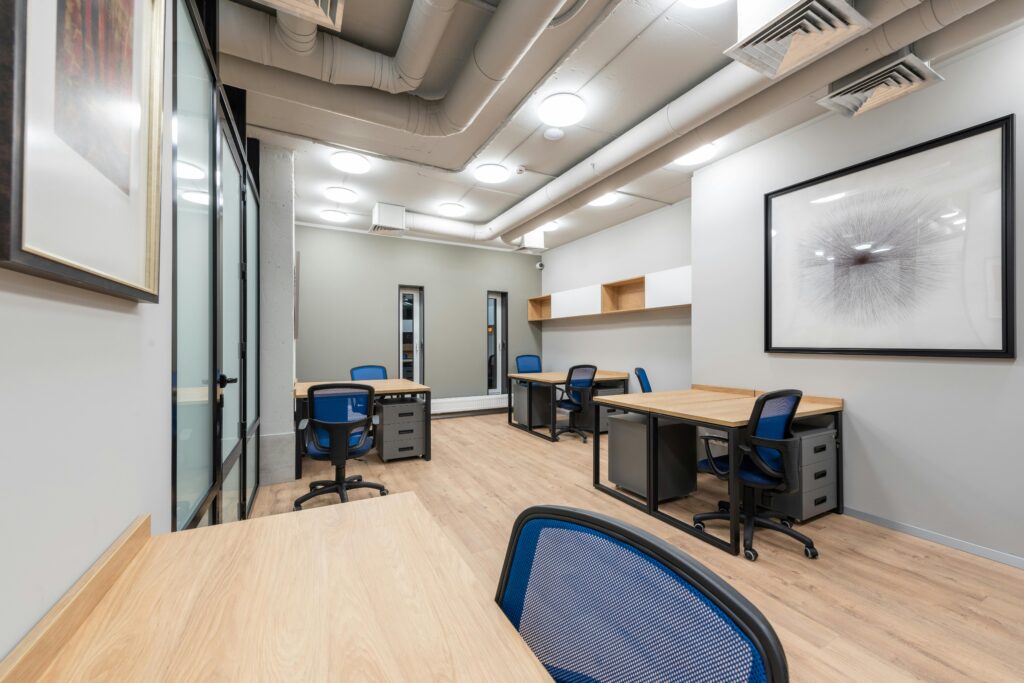
LED Lighting Systems
How quality, design, and control create lifetime efficiency
01
How It Works
LEDs (Light Emitting Diodes) generate light by passing current through a semiconductor chip, which emits photons directly rather than heating a filament like traditional lamps. Because almost all the energy goes into light rather than heat, LEDs operate at much higher efficiency and last far longer.
Unlike fluorescent or halogen lamps that degrade quickly, LEDs maintain lumen output and colour stability for years, making them ideal for schools, offices, and 24-hour environments where consistency and safety are critical.
02
Key Components and Technologies
1. LED Chips & Optics
- High-efficiency chips convert power into light with minimal waste heat.
- Optical lenses or reflectors shape and direct light precisely, reducing glare and shadowing.
- Proper optical design improves visibility and uniformity — vital for classrooms, corridors, and working spaces.
2. LED Drivers
The driver is the electrical heart of an LED fitting. It converts incoming AC mains power to the low-voltage DC current LEDs need, and it stabilises that current. Quality drivers prevent flicker, colour shift, and early failure caused by power fluctuations.
Two main types:
- Constant-current drivers — used in most commercial fittings for stable brightness.
- Constant-voltage drivers — used in strip or modular systems where multiple LEDs share one source.
Poor-quality drivers often fail long before the LEDs themselves, making this the single most important hidden component to specify correctly.
3. Thermal Management
- Even efficient LEDs produce heat that must be dissipated.
- Aluminium heat sinks, thermally conductive housings, and intelligent circuit design keep components cool.
- Stable operating temperatures maintain colour quality and extend lifetime dramatically.
4. Smart Controls & Sensors
- Occupancy sensors switch or dim lights automatically when areas are empty.
- Daylight sensors adjust brightness in response to natural light, maintaining consistent illumination.
- Networked control systems (DALI-2, 0–10 V, Zigbee, or IoT-based) allow centralised management, scheduling, and real-time monitoring across multiple buildings.
03
Key Benefits
- Up to 80 % energy savings compared with fluorescent or halogen.
- Drastically reduced maintenance — no tubes, ballasts, or lamps to replace.
- Improved safety and compliance through higher, more uniform illumination.
- Instant start-up with no flicker or warm-up.
- Enhanced aesthetics and occupant comfort with adjustable colour temperatures.
- Integrates with energy management systems for automated scheduling and reporting.
04
Integration & Control
Modern LEDs integrate seamlessly into wider smart-building networks. Through protocols such as DALI-2, KNX, or BACnet, lighting communicates directly with HVAC, occupancy, or fire-safety systems — enabling true demand-driven control.
FOR EXAMPLE:
- Rooms detected as unoccupied trigger both lighting and heating to reduce load.
- Emergency lighting can be automatically tested and logged for compliance.
- Real-time lighting analytics feed into Cortex™, supporting energy, safety, and ESG reporting.
05
Why Quality Matters (Technical Focus)
Not all LEDs are created equal. Cheap fittings may advertise high efficiency but use low-grade chips, poor thermal management, or unstable drivers — leading to early dimming, flicker, and failure. The result is higher long-term cost, maintenance disruption, and poor compliance.
High-quality fittings from reputable manufacturers provide certified performance data (LM-80 / TM-21 standards), robust drivers, and warranties of 5–10 years or longer. Specifying correctly means your lighting investment delivers consistent, compliant, and efficient operation for decades.
06
Funding & Incentives
LED upgrades qualify for numerous energy-efficiency financing and leasing programmes, often structured so that energy savings offset repayments from day one. Public-sector and educational estates can often access Salix or PSDS funding support.
Heating & HVAC
Modern heating, ventilation, and air-conditioning solutions for optimal comfort and efficiency.
Heating and cooling are often responsible for more than half of a building’s total energy use — making them one of the most critical levers for decarbonisation. By upgrading ageing plant to modern systems such as heat pumps, high-efficiency condensing boilers, and smart controls, organisations can cut both costs and emissions while improving comfort and reliability.
Advanced systems automatically adjust output to match occupancy, outside temperature, and usage patterns. They deliver stable warmth and healthier air quality across complex estates while reducing waste.
For schools, local authorities, and large commercial sites, modernising HVAC isn’t just an environmental upgrade — it’s a chance to stabilise budgets, extend asset life, and demonstrate leadership in sustainability.
Heat Pumps
Clean, efficient heating for modern estates
This page expands on the technology behind our Heat Pump systems — showing how system design, component quality, and proper integration deliver long-term performance, comfort, and savings.
01
How They Work
A heat pump doesn’t generate heat; it moves it. Using a refrigeration cycle, it extracts low-grade thermal energy from air, ground, or water, then compresses and transfers that heat indoors for space heating or hot water. When reversed, the same system can provide cooling — delivering year-round climate control from a single unit.
02
Key Types
- Air Source Heat Pumps (ASHP) – draw heat from ambient air; quick to install and ideal for retrofits.
- Ground Source Heat Pumps (GSHP) – use buried pipe loops to capture stable underground temperatures for high efficiency in all seasons.
- Water Source Heat Pumps (WSHP) – extract energy from lakes, rivers, or aquifers where available, offering exceptional performance in suitable locations.
03
Key Benefits
- 300–500 % efficiency (Coefficient of Performance 3–5).
- Reduced operational costs compared to gas, oil, or LPG.
- Heating and cooling from one system.
- Zero on-site carbon emissions when powered by renewables.
- Low maintenance and long service life (15–25 years).
04
Integration & Control
The best results come when heat pumps are integrated with smart HVAC controls and zoned heating strategies. Intelligent management ensures heat is delivered only where needed, balancing comfort and energy use across large or complex estates.
When combined with solar PV or battery storage, overall efficiency and carbon reduction improve dramatically.
05
Why Quality Matters (Technical Focus)
System design is everything. Poorly sized or incorrectly specified heat pumps can underperform, increase energy bills, and reduce comfort. High-quality compressors, precise controls, and correct integration with emitters (radiators, fan coils, or underfloor systems) ensure quiet, efficient, reliable performance for decades.
Quality installation, commissioning, and ongoing monitoring are the cornerstones of successful long-term operation.
06
Funding & Incentives
Government schemes such as the Boiler Upgrade Scheme (BUS) and regional decarbonisation grants can subsidise installation costs, making heat pumps an accessible route to net zero for schools, councils, and commercial estates.
High-Efficiency Boilers
Reliable, efficient, and built for modern estates
This page expands on the technology behind our high-efficiency boiler systems — showing how advanced combustion, condensing heat recovery, and digital control deliver low-cost, low-carbon heating.
01
How They Work
Modern condensing boilers recover latent heat from exhaust gases that older boilers simply waste. This allows efficiencies above 90–94 %, meaning more of your fuel is turned into usable heat.
By combining modulating burners with smart flow and return-temperature control, they adjust output precisely to real demand — minimising fuel consumption and reducing wear.
02
Key Components & Technologies
- Condensing Heat Exchangers — stainless-steel or aluminium exchangers capture heat from exhaust vapour.
- Modulating Burners — variable-speed fans and gas valves maintain combustion efficiency across different loads.
- Digital Controllers — constantly adjust temperature set-points for optimal performance.
- Hydraulic Separation & Pumps — ensure system balance and efficiency in multi-zone estates.
04
Integration & Control
Condensing boilers can integrate seamlessly with smart controls and heat pumps in hybrid configurations. During periods of peak demand or extremely cold weather, the system prioritises the most efficient or cost-effective source automatically.
05
Why Quality Matters (Technical Focus)
Low-grade boilers may achieve high headline efficiency but degrade quickly due to corrosion or poor condensate management. Premium boilers with stainless-steel exchangers, high-turndown ratios, and advanced control interfaces deliver consistent performance for 15 – 25 years with minimal maintenance.
06
Funding & Incentives
Condensing boiler replacements can qualify under public-sector energy-efficiency schemes or be included in wider decarbonisation projects that blend gas, electric, and renewable heat sources.
Smart Controls & Zoning
Intelligent management for comfort, efficiency, and insight
This page expands on the technology behind our smart HVAC controls — explaining how automation, zoning, and predictive management reduce energy use while improving comfort.
01
How They Work
Smart control systems continuously analyse building conditions — occupancy, temperature, humidity, and outside weather — then automatically adjust heating and cooling output to maintain comfort with minimal energy use.
02
Key Components & Technologies
- Zone Controllers — divide large estates into independent heating/cooling zones for precise control.
- Occupancy Sensors — shut off or reduce heating in unused areas.
- Weather Compensation — adjusts system flow temperature according to outside conditions.
- Smart Thermostats — learn patterns and fine-tune schedules automatically.
- Building Management System (BMS) Integration — provides central monitoring, control, and analytics through platforms like Cortex™.
03
Why Quality Matters (Technical Focus)
Low-grade boilers may achieve high headline efficiency but degrade quickly due to corrosion or poor condensate management. Premium boilers with stainless-steel exchangers, high-turndown ratios, and advanced control interfaces deliver consistent performance for 15 – 25 years with minimal maintenance.
04
Predictive & Remote Management
AI-assisted systems can anticipate load changes and flag inefficiencies before faults occur. Remote dashboards allow engineers to monitor multiple sites, update schedules, and respond to issues instantly.
Biomass Heating Systems
Renewable, resilient, and carbon-neutral
This page expands on the technology behind our biomass heating systems — detailing how renewable fuels and modern automation deliver low-carbon heat at scale.
01
How They Work
Biomass systems burn renewable fuels such as wood pellets, chips, or logs to generate heat for buildings or district networks. The CO₂ released during combustion is approximately balanced by that absorbed during the fuel’s growth, creating a closed carbon cycle.
02
Key Components & Technologies
- Fuel Storage & Handling — silos or hoppers feed automated screw conveyors that deliver fuel to the boiler.
- Combustion Chambers & Burners — engineered for complete, efficient combustion and low particulate emissions.
- Heat Exchangers — transfer heat to the water circuit efficiently.
- Emission Control Systems — electrostatic filters or cyclones remove particulates to meet local air-quality standards.
- Automation & Safety Controls — manage ignition, feed rate, and ash removal with minimal user input.
04
Integration & Control
Biomass boilers integrate with district heating loops or central plant rooms, often paired with thermal stores for load balancing. Hybrid systems can use biomass as the base-load source with heat pumps or gas boilers providing peak or backup demand.
05
Why Quality Matters (Technical Focus)
Poorly designed biomass systems can suffer from incomplete combustion, tar build-up, and high maintenance. High-quality designs ensure consistent fuel supply, efficient burn cycles, and compliance with emissions regulations. Long-term fuel contracts and certified pellets guarantee reliability and sustainability.
06
Funding & Incentives
Biomass installations may qualify for Renewable Heat Incentive (legacy) replacement programmes, Boiler Upgrade Scheme, or local decarbonisation grants.
Hybrid & Integrated Systems
The best of every technology, intelligently combined
This page expands on hybrid heating systems — showing how multiple heat sources can be optimised for performance, cost, and resilience.
01
How They Work
Hybrid systems link two or more heat sources — typically a heat pump with a gas or biomass boiler — under one intelligent control system. The controller decides which technology operates based on outside temperature, fuel cost, or carbon intensity, ensuring the most efficient or sustainable source runs at any given time.
02
Key Benefits
- Year-round reliability — backup heat for extreme conditions.
- Optimised efficiency — automatic source selection for best performance.
- Lower lifecycle cost — extended equipment life through balanced run hours.
- Lower lifecycle cost — extended equipment life through balanced run hours.
- Future-ready — allows gradual transition from fossil fuels to renewables.
03
Why Quality Matters (Technical Focus)
Hybridisation demands precise design and control logic. Incorrect sequencing or poor flow management can cause inefficiency or component stress. High-quality hydraulic design and control integration ensure seamless switching and stable operation.
04
Why Quality Matters (Technical Focus)
Hybridisation demands precise design and control logic. Incorrect sequencing or poor flow management can cause inefficiency or component stress. High-quality hydraulic design and control integration ensure seamless switching and stable operation.
What Next?
Ready to explore how these technologies can transform your buildings? Our experts can help you identify the right solutions for your needs.